
终极一班3
海南织密食品安全“全链条”防护网 智慧监管“耳聪目明”,海南织密食品安全“全链条”防护网 智慧监管“耳聪目明”_我的网站

A | 海口8月22日电 (张茜翼 张芷懿)从农田土壤到网络外卖,从生产许可到校园餐桌,海南正以多部门联动和数字化手段,为食品安全筑起一道覆盖全链条的“防护网”。
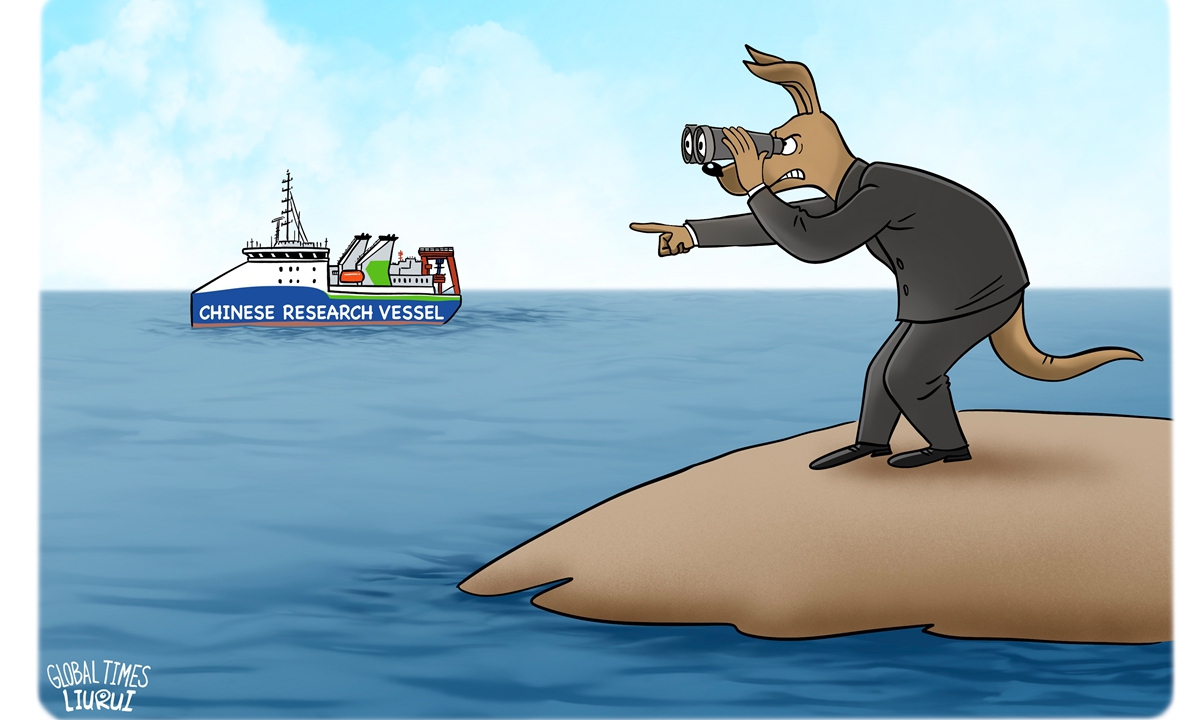
Published by the National Security College at the Australian National University (ANU), the paper claimed recent damage to cables in the Baltic Sea and around China's Taiwan region suggests "state actors are now actively probing and testing cable infrastructure in peacetime as part of broader hybrid warfare strategies" to rapidly degrade connectivity at the outset of a conflict, The Australian reported.
The paper claimed 16 privately owned subsea cables that carry 99 percent of Australia's internet traffic are a "high priority target" for Australia's adversaries that could be severed in a conflict, threatening the nation's economy and social fabric, according to The Australian.
The report singled out China and Russia for blame, saying that there have been multiple apparent attacks on submarine cables in recent years in European waters as well as near China's Taiwan region, suspected to be linked to Russia and China, the Straits Times reported.
However, the report cites a 2025 voyage by Chinese research vessel Tan Suo Yi Hao along Australia's western and southern coastlines as evidence to back its claim that "potential adversaries are actively gathering information about Australia's cable infrastructure."
This report, relying on the routine scientific operations of a Chinese research vessel in 2025 to level allegations of offensive actions against China, and employing ambiguous terminology such as "suspected" and "potential," demonstrates Australia's evidentiary leap, Chen Hong, director of the Australian Studies Center of East China Normal University, told the Global Times on Monday.
This erroneous claim was refuted by the Chinese Foreign Ministry at the time. Chinese Foreign Ministry spokesperson Guo Jiakun said on March 31, 2025 that China carries out normal activities at sea in accordance with international law, including UNCLOS.
"We hope Australia will have a right understanding of this and stop the groundless suspicion and speculations," Guo added.
This is not the first time certain Australian politicians has leveled baseless accusations of China intending to sabotage its undersea cables. Back in May, Defense Minister Richard Marles claimed during the Shangri-La Dialogue that China ought to boost transparency around its maritime operations. He also asserted that a surge in damage to subsea cables had transformed the seabed into a "battlefield," per The Australian.
Chen said Australian side's scaremongering is tied to its predictive threat‑perception framework forged in recent years. This framework designates China and other countries as strategic competitors in advance, subsequently forces routine scientific activities into a confrontational framework, Chen said.
Apart from unfounded allegations against China, the paper claims Australia's defense military "must incorporate the defense of submarine cable infrastructure into its operational planning," according to The Australian.
It added the government should also consider up¬grading an auxiliary ship operated by the navy, ADV Guidance, to enable it to repair damaged cables.
The vast majority of submarine cable damages are caused by accidental factors such as fishing operations and vessel anchoring, rather than deliberate sabotage. For suspected cases of intentional damage, independent technical investigation bodies should be established, and the principle of "investigate first, characterize later" should be strictly applied, so as to prevent ordinary maritime accidents from escalating into diplomatic conflicts, Chen said.
The core problem of Australian side's submarine cable security lies entirely with itself. Instead of addressing its own infrastructure shortcomings and improving its domestic protection and maintenance systems, the Australian side has chosen to continually exaggerate external threats and stoke bloc confrontation, the expert added.
Chen said that by fabricating alleged Chinese threats, Australian side seeks to "rationalize" its military spending increases and underwater force expansion. The submarine digital infrastructure originally meant to serve global development has been labeled along us versus them lines, and this constitutes the biggest hidden danger, he added.
。 21日,海南省市场监管局副局长黎运达在“高标准建设海南自由贸易港”系列主题新闻发布会——进一步强化食品安全全链条监管专场上表示,海南强化食品安全全链条监管,守牢“从农田到餐桌”每一道防线。 针对食用农产品、食品生产、贮存运输、跨境进口等环节,海南已出台《海南省进一步强化食品安全全链条监管提升食品安全保障水平的实施方案》,明确建立完善7个方面协同监管措施,并由农业农村、海关、商务、市场监管、教育和邮政管理等部门牵头建立和落实36项重点机制制度,涵盖合格证问题通报协查、学校食堂食品安全全过程管理、跨境电商零售进口食品负面清单、寄递安全制度等内容。2025年10月24日,海南海口美兰国际机场国际货站,工作人员搬运即将出港的跨境电商货物。 记者 骆云飞 摄 智慧赋能,正成为海南食品安全执法的“探照灯”。黎运达说,海南以数智化手段赋能食品安全监督,让监管更加“耳聪目明”。农业农村部门持续优化“牧运通”系统,对全省畜禽规模场、屠宰企业、散养户等管理对象全部实行实名制管理,全面推行动物检疫证、肉品品质检验证明的无纸化出证;同时强化动物检疫信息在各环节的共享,实现全链条追溯与各环节协同智慧监管。 校园食品安全是监管重点之一。海南教育部门加快推动学校数字食堂智慧监管平台建设,目前全省中小学校食堂“互联网+明厨亮灶”覆盖率达100%,实现“线上+线下”同步智慧监管。 市场监管部门全面推动“互联网+AI监管”转化为实践应用。黎运达表示,海南运用大数据、人工智能等技术实现风险智能研判,积极破解基层执法力量不足难题,进一步提升监管质效。粮食和储备部门建立省级储备粮轮换调运电子凭证与质量报告关联机制,实现内部闭环质量追溯。 据统计,截至目前,海南全省获证且在产在营食品生产经营主体实现“互联网+AI监管”22984家。
Current article:http://abxfi4u.zhuaicaisaanzhenshunnaiwei.bond/list_6pcv1/evs43xm.html
Published on:00:00:00
最新文章
- 多家锂盐厂商半年报业绩大增 最高净利增超10倍
- 炫动冰雪 激情抚顺 期待!又一戏雪乐园开园在即!
- 冲刺四季度|抚顺县:高质高效打好全年“收官”战
- 2025年淘宝京东618活动6月16日20点开始买最便宜!618活动红包满减优惠攻略!
- 罗马诺独家:利物浦5000万镑报价水晶宫边锋萨尔,明特转会告吹
- OnLeCube重新曝光苹果的“iPhone XI”渲染:三个相机环闪光灯
- Vlad因禁赛将缺席对阵Team Liquid的无畏契约比赛
- 1+1>2?专家表态:新加坡这项指标或将被柔佛超越!但两者优势互补,不构造竞争关系
- 浙江发布山洪灾害红色预警
- 北京市一季度财政收入1789.2亿元 社会保障和就业财政支出同比增长6%
标签云
热门文章
- 天工团队回应机器人捂脸跑夺冠:没有找小姑娘让它学,是它自己想出来的
- Xi extends condolences to Indonesian president over strong earthquake
- 济南:“普惠+特殊”服务 为先模人物赠送大病互助保障
- 突破百万美元众筹,LUMISTAR CARRY篮球发球机重新定义“AI队友”
- Robots compete at library-themed event in Beijing(1/3)
- 当机器人开始跑步:我们为何需要一双“看得见”未来的眼睛?,当机器人开始跑步:我们为何需要一双“看得见”未来的眼睛?
- 上海黄浦:到2030年,预计累计新增高能级首店100家左右
- 转型两年盈利迎来修复,安德玛好起来了?
- 摩尔线程公布万卡级集群训练成绩 称国产芯片可训出前沿模型
- 大乐透第26081期开5注一等奖